



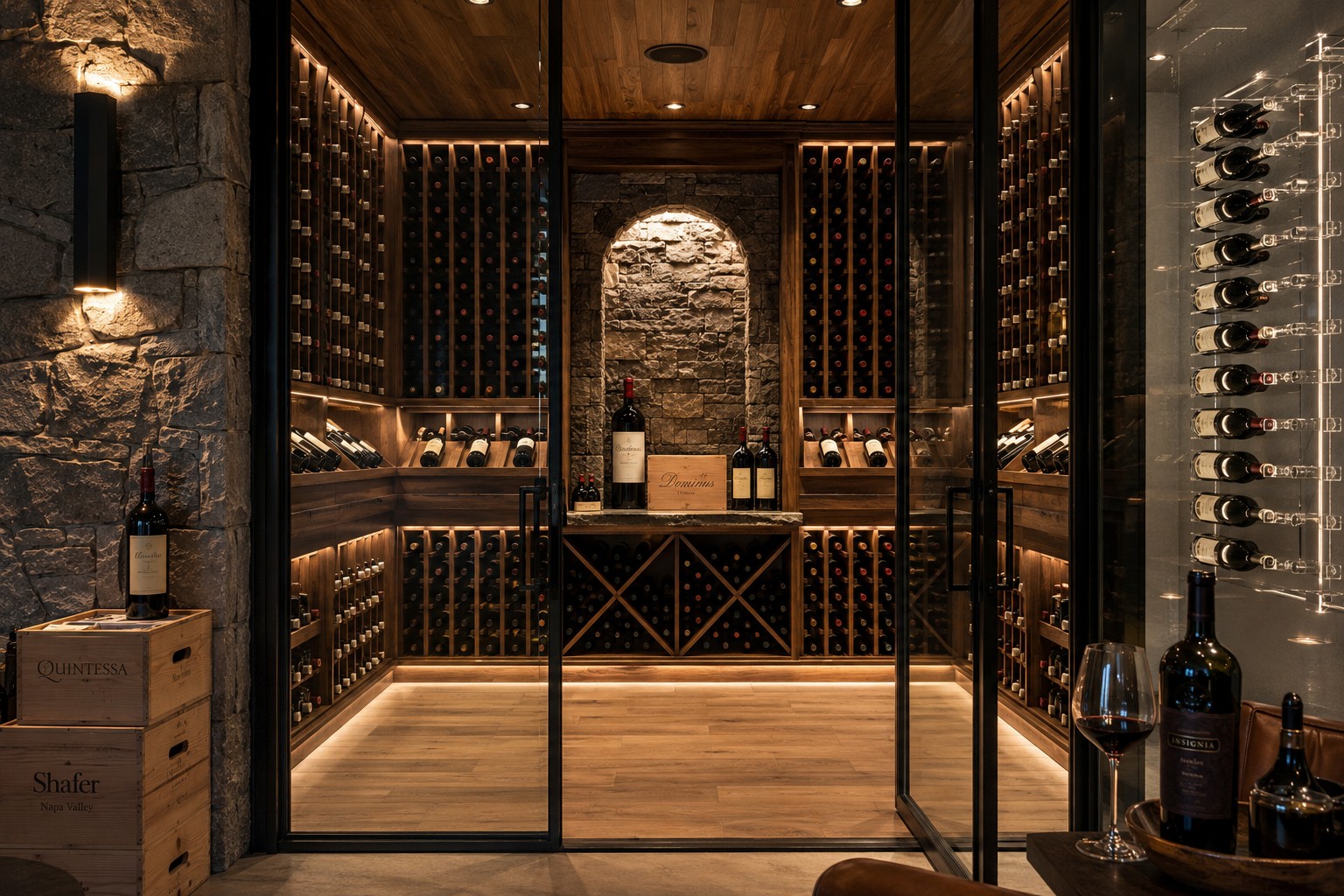
Wine Cellar Finishes: How to Choose the Right Materials for Your Home
Wine Cellar Finishes: How to Choose the Right Materials for Your Home
A beautiful wine cellar is about more than the number of bottles it holds.
The materials you choose for the walls, flooring, ceiling, doors, lighting, glass and wine racking all contribute to the look, functionality and overall experience of the space. Just as importantly, those materials need to work within the environmental requirements of a properly designed wine cellar.
Whether you are creating a compact residential wine room or a large custom cellar for a growing collection, choosing finishes early in the design process can help ensure that the finished space feels intentional rather than assembled piece by piece.
The right finishes should complement your home while supporting the practical requirements of long-term wine storage.
Start With the Wine Cellar Environment
Before choosing colors, flooring or decorative materials, make sure the room itself is being designed as a proper wine-storage environment.
A wine cellar is not simply a room with wine racks and a cooling unit. The walls, insulation, vapor barrier, door, ceiling and cooling system all work together to create a stable environment.

Temperature control is especially important. A properly designed wine cellar should maintain a consistent environment rather than simply becoming cold.
The construction of the room also matters. Insulation and moisture protection help the cooling system operate effectively and help prevent the surrounding areas of the home from being affected by the conditions inside the cellar.
The surrounding environment matters, too. Heat sources such as radiant flooring in the wine cellar or nearby rooms can affect the cooling requirements of the space. These conditions should be identified during the planning stage rather than after the cooling system has been selected.
This is why the technical design should come before the decorative finishes. A properly planned wine cellar design and build brings these elements together before the finishes are selected.
Choosing Wine Cellar Wall Finishes
Walls occupy a large percentage of the visual space in a wine cellar, so they have a significant impact on the finished appearance.
Traditional wine cellars often use natural wood, but contemporary designs can incorporate painted surfaces, stone, tile, glass and other architectural materials.

Wood
Wood can create a warm, traditional appearance and works particularly well in classic wine-cellar designs.
Depending on the design, wood can be used for:
- Wall paneling
- Architectural details
- Trim
- Doors
- Wine racking
- Ceiling treatments
When selecting wood, consider how its color and grain will work with the home's existing architecture.
Stone and Tile
Stone and tile can create a more substantial architectural appearance and can work especially well in traditional or Mediterranean-inspired spaces.
However, decorative materials should be selected with the wine cellar's moisture and temperature environment in mind.
Painted and Contemporary Finishes
A modern wine room does not necessarily need dark wood or stone.
Painted walls can create a clean, contemporary appearance, particularly when paired with glass, metal or acrylic racking.
Lighter finishes can also make a smaller wine room feel more open.
Wine Racking Is One of the Biggest Design Decisions
Wine racks are both functional and architectural. They determine how bottles are stored, but they also become one of the most visible elements of the finished wine cellar.
It determines how bottles are stored, but it also becomes one of the most visible elements of the finished wine cellar.
The best racking material depends on the style of the room, the collection, the bottle configuration and the look you want to create.

Wood Wine Racks
Wood remains one of the most traditional wine-cellar racking choices.
It works particularly well in:
- Classic wine cellars
- Traditional homes
- Warm, residential interiors
- Large custom cellars
- Designs where the racking is intended to become part of the architecture
Different wood species and finishes can create dramatically different appearances.
A natural wood finish can emphasize warmth and craftsmanship, while a darker finish can create a more formal, dramatic environment.
Acrylic Wine Racks
Acrylic offers a very different aesthetic.
Rather than making the racking itself the dominant visual feature, acrylic can create a cleaner, lighter appearance that allows the bottles and labels to become the focus.
Acrylic can work especially well in:
- Contemporary wine rooms
- Modern homes
- Display-oriented cellars
- Smaller spaces where a visually lighter design is desirable
It can also be combined with other materials to create a custom appearance.
Metal Wine Racks
Metal racking can provide a sleek, contemporary or architectural appearance.
Depending on the design, metal can be used as the primary racking material or incorporated with wood, acrylic and other finishes.
This approach can work particularly well when the wine room is designed as an extension of a modern home's architecture.
Combining Racking Materials
There is no requirement that every element of a wine cellar use the same material.
Combining materials can create a more customized result.
For example:
- Wood racking with glass doors
- Acrylic racking with contemporary lighting
- Metal racking with natural wood accents
- Wood and acrylic used in different areas of the same cellar
The goal is to create a cohesive design rather than simply choosing the most expensive material.
For more information about selecting custom racking, see our Ultimate Customized Wine Rack Buying Guide.
Glass Can Transform the Look of a Wine Cellar
Glass is increasingly used to make wine collections visible from adjacent rooms.
A glass wall or door can turn a wine cellar into an architectural feature rather than something hidden behind a solid door.

Glass can be particularly effective when:
- The cellar is located off a dining room
- The collection is intended to be displayed
- The home has a contemporary design
- The homeowner wants the wine room to remain visually connected to the surrounding space
However, glass also introduces important considerations for temperature control and energy efficiency.
The wine cellar still needs to be properly insulated and engineered. Decorative glass should never take priority over the requirements of the controlled environment.
Choosing the Right Wine Cellar Door
The door is another element that combines appearance and function.
A wine-cellar door needs to provide an appropriate seal while complementing the overall design.
Depending on the style of the home, options can include:
- Solid wood doors
- Glass doors
- Contemporary architectural doors
- Custom wood-and-glass combinations
The door should be considered as part of the wine-cellar envelope rather than simply as a decorative entry.
A poorly sealed door can make it more difficult for the cooling system to maintain the desired environment.
Flooring Options for Wine Cellars
Flooring is often overlooked during the early stages of wine-cellar design, but it can have a significant effect on the finished room.
Common choices include:
Stone
Stone creates a classic, substantial appearance and works particularly well in traditional wine-cellar designs.
Tile
Tile provides flexibility in color, pattern and style while offering a durable surface that can work well in residential wine rooms.
Hardwood
Hardwood can create a warm, residential appearance and coordinate naturally with wood racking and cabinetry.
Luxury Vinyl and Other Contemporary Materials
Modern wine rooms can also incorporate contemporary flooring materials when they are appropriate for the environment and overall design.
Important: Radiant Flooring
If radiant heating is installed inside the wine cellar, in the proposed wine-cellar space, or in a hallway or room adjacent to the wine cellar, consult with a wine-cellar specialist before construction or installation. Radiant heat can affect the cooling requirements and design of the wine-storage environment and should be considered before the cooling system is selected.
The important consideration is to select flooring as part of the complete wine-cellar design rather than as an isolated finish.
Lighting Should Highlight the Collection—not Compete With It
Lighting can dramatically change the appearance of a wine cellar.
The goal is generally to provide enough illumination to navigate and enjoy the space while avoiding unnecessary exposure of the collection to damaging light.
Well-designed wine-cellar lighting can include:
- Recessed architectural lighting
- LED accent lighting
- Backlighting
- Display lighting
- Under-rack illumination
Lighting can also be used to emphasize architectural features such as arches, stone walls, bottle displays or acrylic racking.
The best lighting design is usually subtle. The wine should remain the star of the room.
Don't Forget the Ceiling
The ceiling is easy to overlook because it is not normally the first thing people notice when they enter a wine cellar.
But it can provide an opportunity to reinforce the design.
Depending on the home, possibilities include:
- Wood ceiling treatments
- Coffered details
- Painted ceilings
- Architectural beams
- Recessed lighting
- Contemporary minimalist finishes
The ceiling should complement the walls and racking rather than compete with them.
Traditional vs. Contemporary Wine Cellar Finishes
There is no single correct style for a wine cellar.
Traditional Wine Cellar
A traditional design might combine:
- Natural or stained wood
- Wood wine racking
- Stone or tile flooring
- Solid wood doors
- Warm lighting
- Architectural details
The result can feel like a classic private cellar.
Contemporary Wine Room
A contemporary design might instead incorporate:
- Acrylic or metal racking
- Glass walls or doors
- Minimal architectural details
- Lighter wall finishes
- Modern lighting
- Clean lines
This approach can make the wine collection feel more like a sophisticated architectural display.
Transitional Wine Cellar
Many homeowners prefer something between the two.
A transitional cellar might combine traditional wood racking with modern lighting and glass, or contemporary racking with warmer architectural finishes.
This can be particularly effective when the wine room needs to fit naturally into an existing home.
Think About the Entire Room Before Choosing Individual Materials
One of the most common design mistakes is selecting individual finishes without considering how they will work together.
For example, a homeowner might choose a beautiful flooring material first and then discover that it clashes with the racking.
Instead, consider the major elements together:
Racking + walls + flooring + doors + glass + lighting + architectural style
Ask:
- What style is the rest of the home?
- Do I want the wine cellar to blend in or stand out?
- Should the bottles or the architecture be the visual focus?
- How large is the collection?
- Will the collection grow?
- How much display space is needed?
- Do I prefer traditional or contemporary materials?
- Will the room be primarily for storage, entertaining or both?
For a broader look at wine cellar layout, materials, racking and design considerations, see our Ultimate Guide to Wine Cellar Design for every home.
These questions can help narrow the choices before construction begins.
Design the Wine Cellar Around the Collection
The best wine cellar designs start with the collection rather than the finishes.
Bottle types, bottle sizes and future growth all affect the racking design.
A collection containing primarily standard Bordeaux-style bottles may require a different racking approach from a collection containing large numbers of Champagne, Burgundy, magnum or specialty bottles.
It is also important to think about accessibility.
Some bottles may be intended for long-term aging while others may be opened regularly. Designing the racking around how the collection is actually used can make the finished cellar considerably more functional.
When a Custom Wine Cellar Makes Sense
A custom wine cellar can be an excellent choice for collectors who want:
- Large or expandable capacity
- A permanent architectural feature
- Custom racking
- Maximum design flexibility
- Dedicated entertaining space
- A wine room designed specifically around the collection
But custom design also requires more planning.
Insulation, vapor protection, cooling equipment, room construction, racking and finishes all need to work together.
For that reason, the design process should begin with the environment and collection requirements—not simply with the appearance of the finished room.
Related: Wine Cabinet or Custom Wine Cellar: Which Is Right for Your Collection?
The Right Finishes Depend on Your Home and Your Collection
There is no single "best" material for a wine cellar.
Wood may be perfect for one collector. Acrylic may be ideal for another. A combination of wood, glass and metal may create the right balance for a contemporary home.
The most successful wine-cellar designs consider the entire environment:
The collection.
The architecture.
The racking.
The materials.
The lighting.
The cooling system.
When those elements are designed together, the result is more than a room filled with wine bottles. It becomes a functional part of the home and a space designed around the collection.
At Wine Appreciation, we help collectors evaluate wine-storage solutions based on their collection, available space and long-term goals.
Whether you are planning a traditional wine cellar, a contemporary wine room or another dedicated storage solution, the right materials and thoughtful planning can make the difference between simply storing wine and creating a space that truly protects and showcases your collection.
Frequently Asked Questions
What is the best material for a wine cellar?
There is no single best material. Wood, acrylic, metal, glass, stone and other materials can all work depending on the design, environment and goals of the wine cellar.
Are acrylic wine racks good for a wine cellar?
Acrylic racking can be an excellent choice for contemporary wine-cellar designs. Its clean, visually light appearance can allow the bottles and labels to become a more prominent part of the design.
What type of wood is best for wine racks?
The appropriate wood depends on the desired appearance, construction and budget. The wood species and finish should complement the home's architecture and the overall design of the cellar.
Can you mix wood and acrylic wine racks?
Yes. Combining materials can create a distinctive custom appearance and can allow different areas of the collection to have different visual treatments.
Does a wine cellar need special flooring?
The flooring should be selected as part of the overall wine-cellar design and should be appropriate for the room's environmental conditions. Stone, tile, hardwood and other materials may be appropriate depending on the project.
Does a wine cellar need a special door?
A properly designed wine cellar should have a door that helps maintain the controlled environment inside the room. The specific door design depends on the construction and design of the cellar.
Should wine cellar lighting be LED?
LED lighting is commonly used in wine-cellar designs because it provides flexibility for architectural and display lighting while producing relatively little heat. Lighting should still be designed thoughtfully to minimize unnecessary exposure of the collection to light.
How do I choose finishes for a modern wine cellar?
Start with the architecture of the home and decide whether you want the racking, bottles or room itself to be the visual focus. Acrylic, metal, glass and clean-lined architectural finishes can work particularly well in contemporary wine rooms.
A Final Thought
A wine cellar should be designed for more than today's collection.
Your collection will change. Your home may change. Your design preferences may change.
Choosing durable materials, flexible racking and a properly engineered storage environment gives the room the best chance of remaining functional and attractive for many years.
The best wine cellar is not necessarily the most elaborate one. It is the one where the environment, storage system and design work together.