



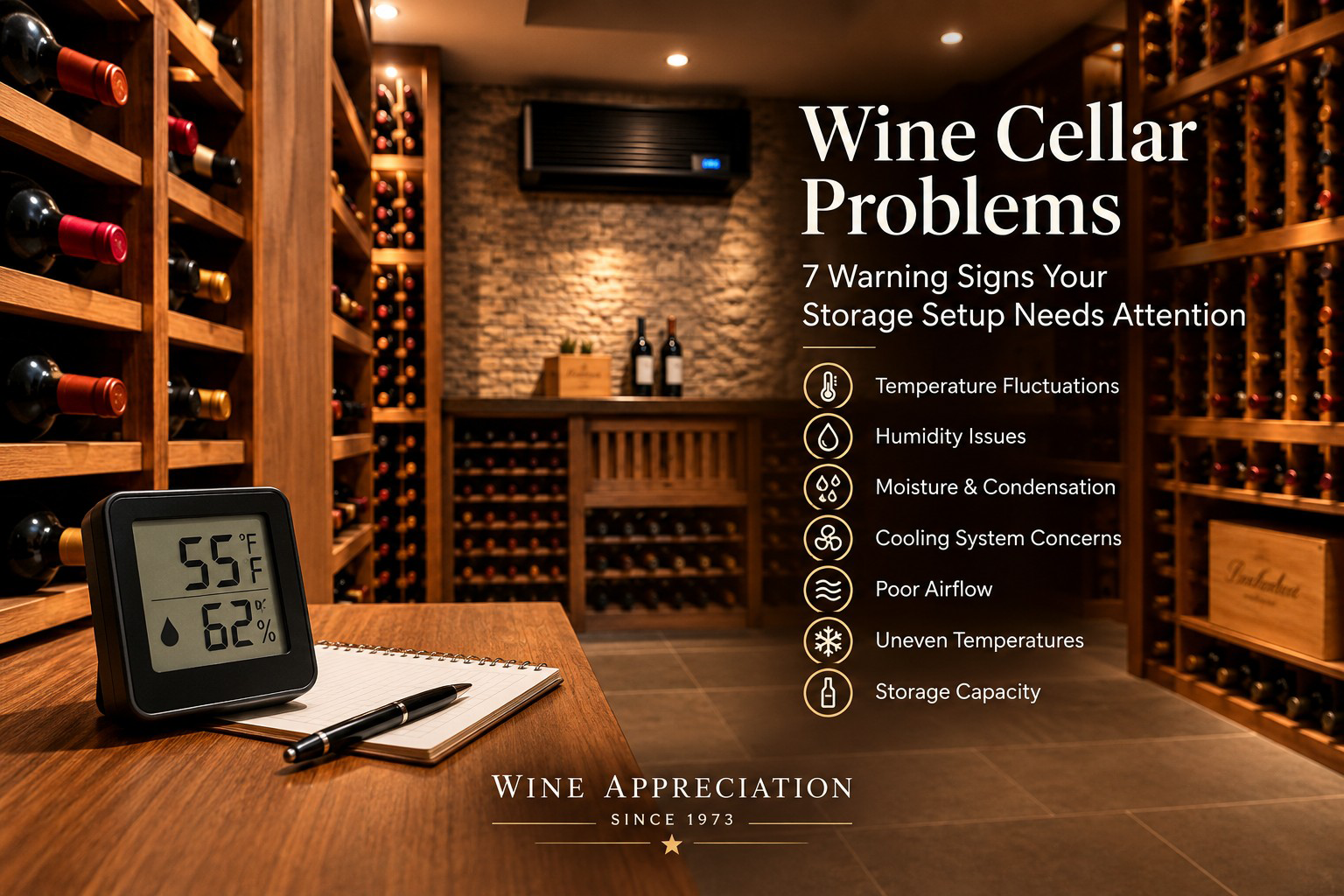
Wine Cellar Problems: 7 Warning Signs Your Storage Setup Needs Attention
Wine Cellar Problems: 7 Warning Signs Your Storage Setup Needs Attention
Learn the 7 warning signs of wine cellar problems, from temperature fluctuations and humidity issues to cooling system concerns, moisture, and poor airflow. Catch potential problems early to help protect your wine collection.
wine-cellar-problems-warning-signs
A properly designed wine cellar should provide a stable environment for your collection without requiring constant adjustments. But changes in temperature, excess moisture, or cooling equipment that struggles to keep up can signal that something needs attention.
Whether you have a dedicated wine cellar or a room adapted for wine storage, recognizing potential problems early can help protect your collection and avoid more costly repairs.
Here are seven warning signs worth watching for.
1. Temperature Fluctuations
Consistency matters when storing wine for the long term. If your cellar experiences repeated temperature swings, it is worth investigating the cause.
Possible contributors include inadequate insulation, an improperly sized cooling system, heat entering through glass or exterior walls, or a cooling unit struggling to maintain the desired conditions.
What to do: Monitor the temperature over several days, including during warmer weather. If fluctuations persist, review your cellar's insulation and cooling requirements.
Related reading: How to Size a Wine Cellar Cooling Unit
2. Humidity That Is Consistently Too High or Too Low
Humidity plays an important role in wine storage. Conditions that are consistently too dry may contribute to cork drying over time, while excessive moisture can encourage mold and damage labels, finishes, and surrounding materials.
What to do: Use a reliable hygrometer to monitor humidity rather than relying on how the room feels. Look for persistent patterns, not just a single reading, before deciding whether corrective action is needed.
Related reading: The Importance of Humidity in Wine Storage
3. Condensation or Signs of Moisture
Water droplets on glass, damp walls, musty odors, or recurring moisture around the cellar deserve attention. Condensation can develop when warm, moist air meets a colder surface, but leaks and other moisture problems are also possible causes.
Ignoring persistent moisture can lead to damage to finishes and surrounding building materials.
What to do: Identify where and when moisture appears. Check for possible leaks and temperature differences, and seek professional advice if the source is unclear or the problem persists.
4. A Cooling Unit That Runs Constantly
A wine cellar cooling system may run for extended periods during hot weather or after the cellar has warmed up. However, a unit that rarely cycles off or cannot maintain the set temperature deserves investigation.
Potential causes include excessive heat entering the room, restricted airflow, dirty filters or coils, a system that is not properly sized, or an equipment problem.
What to do: Check the manufacturer's maintenance recommendations and make sure airflow is unobstructed. If performance does not improve, have the system evaluated before assuming the unit needs replacement.
5. Uneven Temperatures Throughout the Cellar
Does one part of your cellar feel noticeably warmer than another? Temperature differences can develop when airflow is restricted, heat enters through a particular wall or window, or the room's layout interferes with air circulation.
These differences may be difficult to detect without measuring temperatures in several locations.
What to do: Compare readings in different areas of the cellar, particularly near doors, glass, exterior walls, and the farthest points from the cooling system. Persistent differences may indicate a design or airflow issue.
6. Poor Airflow Around the Cooling Equipment
Wine cellar cooling systems need adequate airflow to operate as intended. Blocking intake or discharge areas with stored items, cabinetry, or other obstructions can interfere with performance.
The space into which a system releases heat is also important. A unit that cannot reject heat effectively may struggle to cool the cellar.
What to do: Review the manufacturer's clearance requirements and keep the equipment's intake and discharge areas unobstructed. For ducted or split systems, have persistent airflow or heat-rejection concerns evaluated by a qualified professional.
7. Your Storage Setup No Longer Fits Your Collection
Not every wine cellar problem involves a mechanical failure. As collections grow, a cellar that once worked well may become crowded, difficult to navigate, or impractical to use.
Overcrowding can obstruct airflow, make bottles harder to access, and leave little room for future purchases. Adding racks without considering circulation and cooling requirements can create new problems.
What to do: Reassess your current bottle count, expected collection growth, access needs, and available space. If you're considering a redesign or expansion, plan storage capacity and cooling requirements together.
Related reading: Wine Cellar Layout: 7 Things to Consider Before You Build
Address Small Problems Before They Become Bigger Ones
A temperature fluctuation, a patch of condensation, or a cooling unit that runs longer than expected does not automatically mean your wine cellar has a serious problem. The key is recognizing persistent changes and identifying their cause before they affect the collection or damage the surrounding space.
Wine cellar performance depends on several factors working together, including insulation, room construction, cooling capacity, airflow, and humidity management. Addressing those elements as a complete system can be more effective than treating each symptom in isolation.
At Wine Appreciation, we've been helping wine enthusiasts with wine storage solutions since 1973. If you're unsure whether your cellar's conditions or cooling system are appropriate for your space, our experience can help you determine what to consider next.